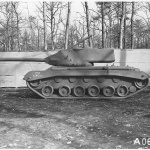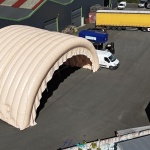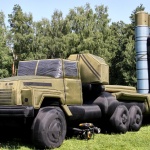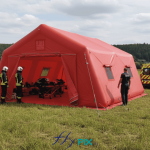
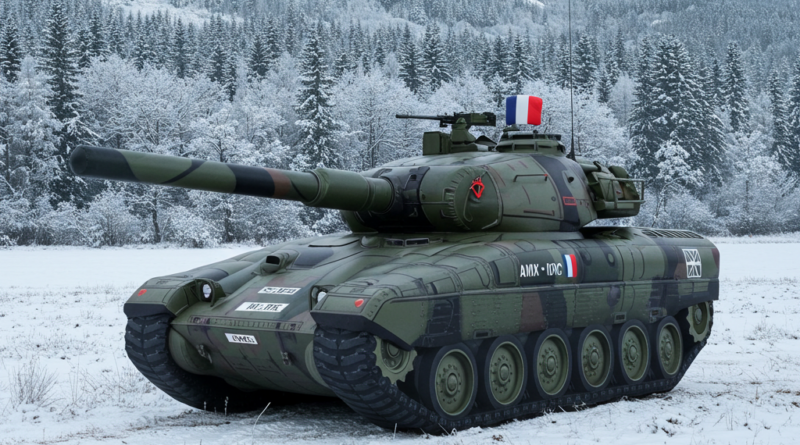
Military inflatable decoys and the strategy of military deception to mislead the enemy in wartime (dummy tank, pneumatic decoy, inflatable fake tank)
We offer our know-how and expertise for the custom design and manufacture, in France, of inflatable military decoys: boats, frigates, tanks, helicopters, aircraft, armored vehicles, missile launchers, etc. – Tell us about your project and contact us
In a world where modern warfare relies as much on technology as on deception, inflatable military decoys represent one of the most discreet and effective weapons in military deception strategy.
Military deception strategy, also called military deception or maskirovka in Russian vocabulary, consists of misleading the adversary about one’s intentions, real strength or position.
In a contemporary theater of operations characterized by pervasive surveillance and fierce information warfare, the art of military deception is experiencing a spectacular renaissance.
At the heart of this tactical revolution lies a surprising but formidably effective tool: the inflatable military decoy.
These hyper-realistic replicas, capable of simulating tanks, anti-aircraft defense systems and even aircraft, transform the perception of the adversary and redefine the contours of modern strategy.
This in-depth article explores the history, technology, tactical advantages and profound impact of these inflatable devices on the conduct of war, analyzing how deception becomes a weapon of mass deterrence and economy of means.
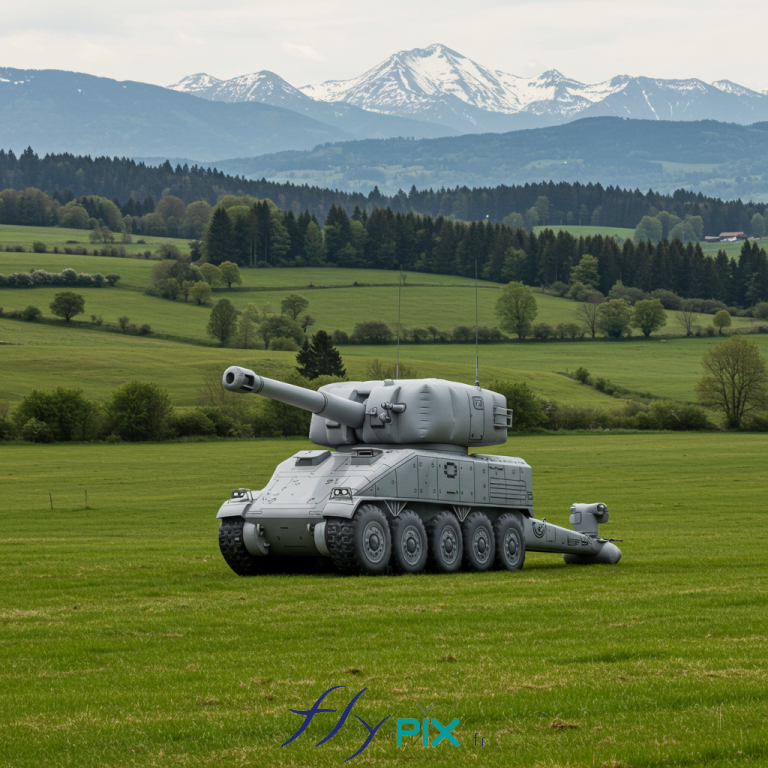
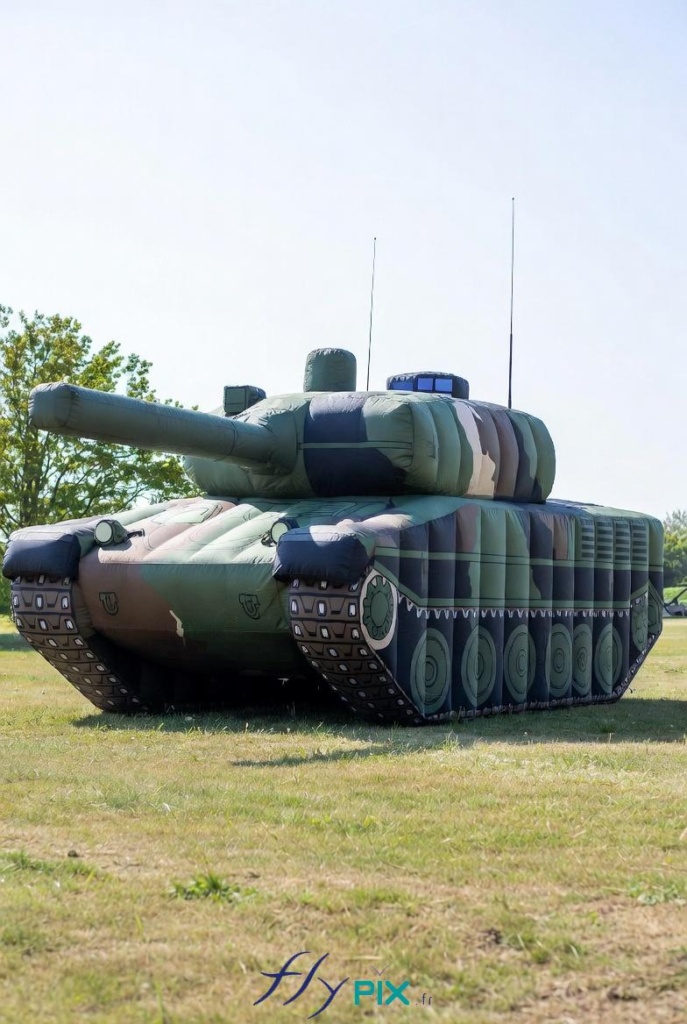
These pneumatic decoys, true inflatable replicas of tanks, planes, missile batteries or logistics vehicles, make it possible to deceive the enemy, divert their attention and protect the real forces.
At a time when drones, satellites and artificial intelligence are scrutinizing every square meter of the battlefield, these inflatable military decoys offer an economical, quick-to-deploy and surprisingly realistic solution.
It is as old as war itself: from the Trojan horse to the camouflage operations of the Second World War, via the inflatable decoys of the Normandy landings.
Today, inflatable military decoys (also called inflatable decoy , pneumatic decoy , dummy tank , inflatable fake tank or inflatable military replica) constitute the modern and high-tech version of this ancestral strategy.
Made from reinforced military PVC or ultra-resistant composite materials, these decoys are designed to look exactly like real equipment, even under satellite or drone observation.
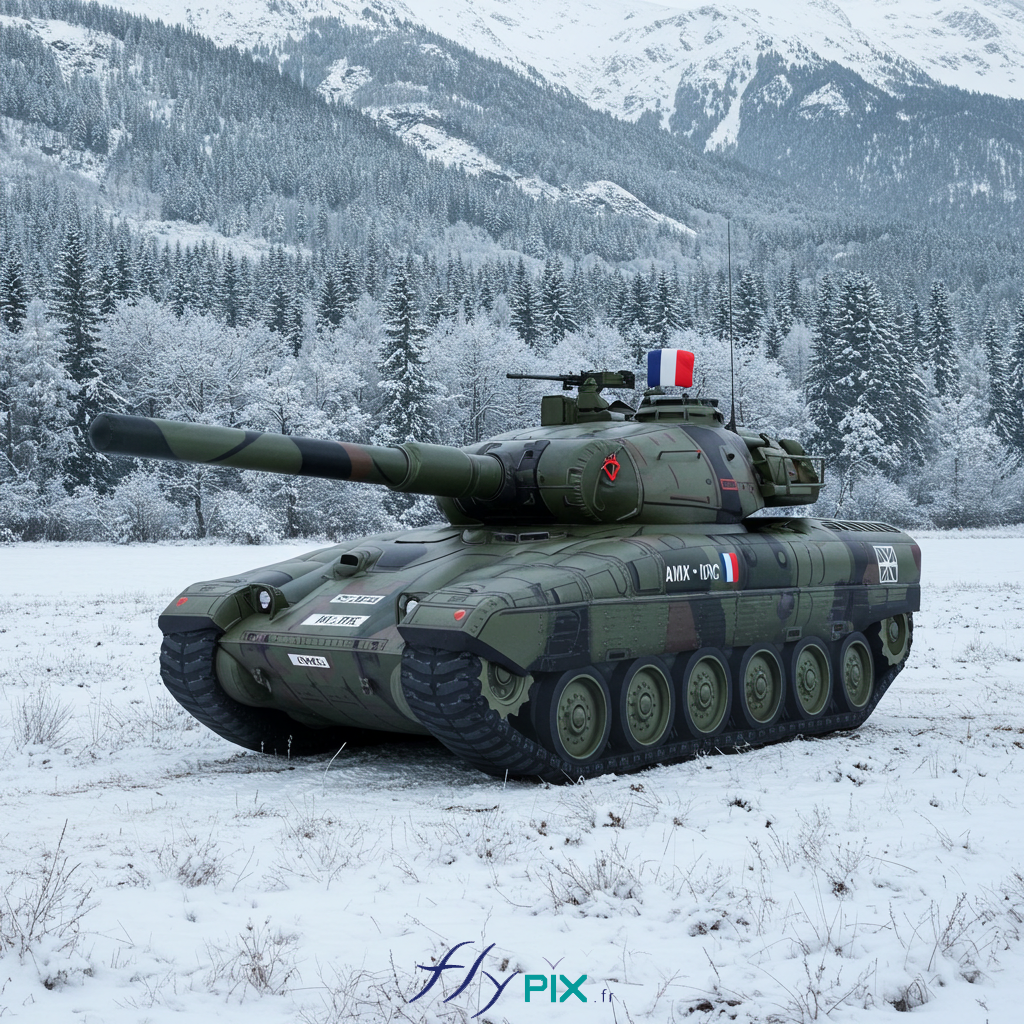
War is not just a matter of brute firepower; it is also, and perhaps above all, a battle of intelligence, perception, and manipulation. Sun Tzu, the legendary Chinese strategist, understood this centuries ago when he stated that ” all warfare is based on deception .”
This maxim, far from being outdated, resonates particularly strongly in the digital age, with its surveillance satellites and drones. The ability to mislead the enemy, to make them waste precious resources, and to surprise them at the critical moment is more crucial than ever.
In this context, the inflatable military decoy stands out as a solution of remarkable strategic elegance.
Combining economy of means and tactical efficiency, it embodies the fusion between modern engineering and the timeless principles of warfare.
Far from being mere balloons, these devices have become complex systems designed to deceive not only the human eye, but also the most sophisticated radar, thermal and electronic sensors.
The aim of this article is to delve into the heart of this fascinating technology, to analyze how it fits into the overall strategy of deception, and to explore the many ways in which it can influence the outcome of modern conflicts.
By examining the historical evolution of deception, the technical design of decoys and their applications in the field, we will paint a complete picture of this essential strategic tool.
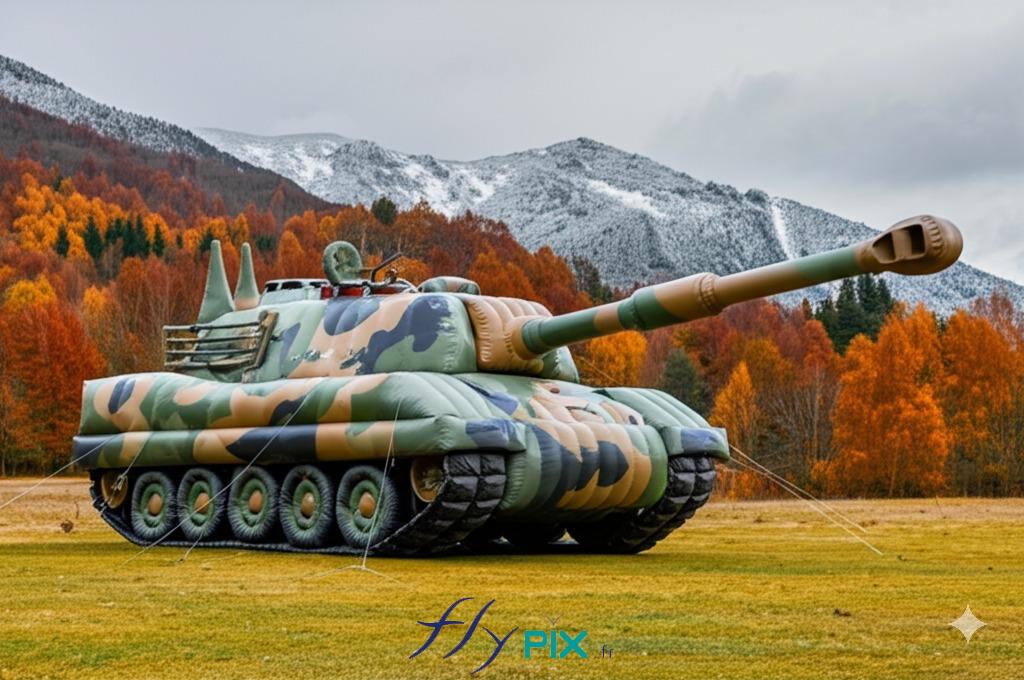
Today’s inflatable military decoys are high-tech products:
- Materials : 0.8 to 1.2 mm reinforced military PVC, UV-resistant, fire-resistant, weatherproof and puncture-resistant coating.
- Visual realism : High-definition 3D digital printing, simulated folds, mud marks, artificial rust.
- Multispectral signature :
- Internal heating to simulate engine heat.
- Radar-absorbing or emitting coatings to deceive radars.
- Materials that mimic the infrared signature.
- Inflation systems : Integrated electric or compressed air compressors, inflation in less than 5 minutes, deflation even faster.
- Mobility : Self-propelled, towable or trailer-mounted versions.
- Embedded intelligence : Some models integrate IoT sensors that automatically adjust the thermal or radar signature according to conditions.
The main models include:
- Tank decoys (Leclerc, Abrams, T-90, Leopard)
- Aircraft decoys (Rafale, F-35, Su-35)
- Decoys for air defense systems (S-400, Patriot)
- Logistics and command vehicle decoys
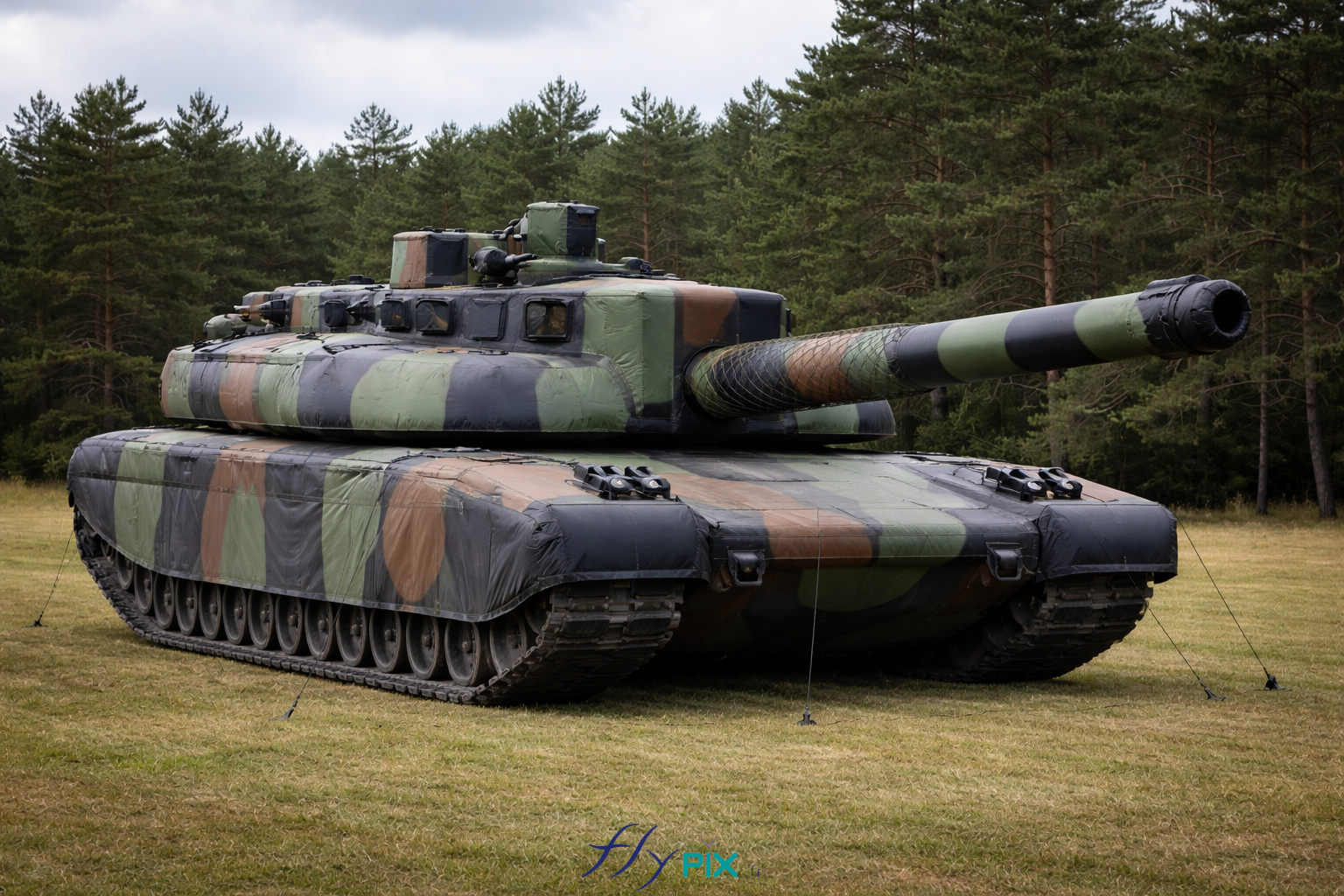
The historical foundations of military disappointment
Cunning and deception are as old as war itself. Military history is full of examples where creativity and ingenuity triumphed over brute force.
The use of fake camps, dummies, fake equipment noises or deceptive radio signals has been a constant in major conflicts.
Antiquity and the Middle Ages: The First Beginnings of Cunning
Even in antiquity, there are traces of the use of stratagems to mislead the enemy.
The famous Trojan Horse is an iconic example of a ruse used to infiltrate a fortified city.
Later, Genghis Khan used additional campfires and dummies on horses to make it appear that his army was larger than it actually was.
World War II: The Golden Age of Military Disappointment
During the First World War, the British deployed painted wooden cannons.
But it was during the Second World War that military deception became a true science.
One of the most famous examples is Operation Bodyguard , designed to conceal the exact date and location of the Normandy landings.
Operation Fortitude (1944) : The Allies deployed hundreds of inflatable military decoys (tanks, planes, trucks) in England to make the Germans believe that the landing would take place in Calais rather than in Normandy.
These lures were made of inflatable rubber, already very realistic for the time.
As part of this operation, the American ” Ghost Army ” was created.
This unit used over 1,000 inflatable decoys (Sherman tanks, trucks, cannons) and sound recordings to simulate entire divisions.
This special unit was composed of artists, designers and engineers whose mission was to use inflatable decoys (fake Sherman tanks, trucks, planes), sound recordings of heavy equipment and fake radio signals to create the illusion of massive military units in strategic locations.
The Cold War and the Modern Era: The Evolution Towards High Technology
After 1945, the USSR perfected the maskirovka with massive inflatable decoys.
In the 1970s and 1980s, the Israeli and American armies developed more sophisticated versions for Middle Eastern conflicts.
During the Cold War, the two superpowers continued to develop deception techniques, including using decoys to conceal their missile sites and air bases.
Modern military inflatable decoys appeared in the 2000s: more resistant materials, multispectral camouflage (visible, infrared, radar), heating system to simulate thermal signature, and even radar signal emitters to deceive detection systems.
The advent of surveillance satellites has made the task more difficult, but also more crucial.
In recent conflicts, such as in Yugoslavia, Iraq and more recently Ukraine, the use of inflatable decoys has intensified.
Advanced technologies have made it possible to create increasingly realistic decoys, capable of fooling increasingly sophisticated sensors.
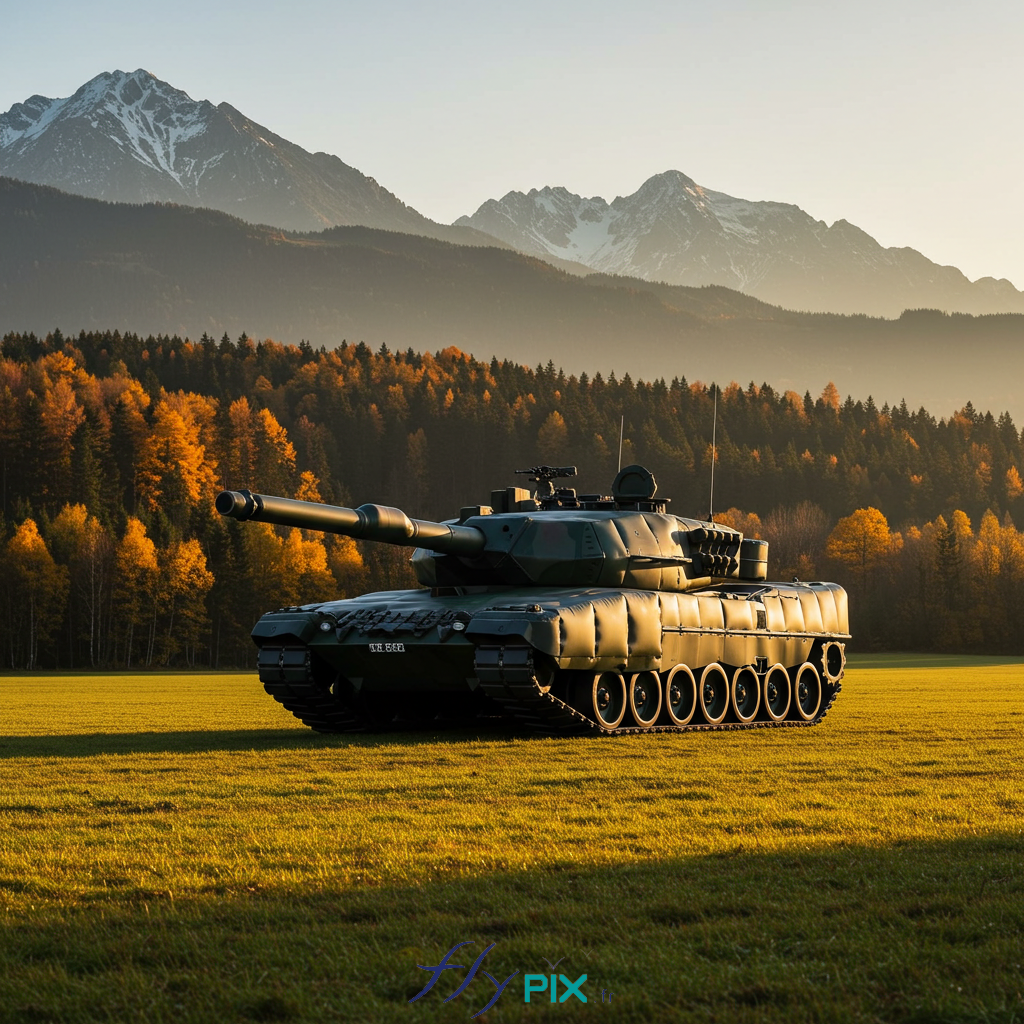
The technology behind modern military inflatable decoys
Modern military inflatable decoys are much more than just balloons.
They are the result of precision engineering, combining advanced materials, 3D printing techniques and sophisticated signature simulation systems.
The goal is to create an object that, viewed from space, by a drone or by a thermal camera, is indistinguishable from the real equipment.
The materials: durability and hyperrealism
The lures are made from high-performance technical textiles, often reinforced polymers, which are lightweight, durable, and weather-resistant.
The surface is painted or printed with hyper-realistic camouflage patterns that faithfully mimic the appearance of real military equipment.
The smallest details, such as antennas, ventilation grilles, hatches and even the textures of tires or tracks, are reproduced with an astonishing level of accuracy.
Signature simulation: deceiving sensors
The real strength of modern lures lies in their ability to simulate the different “signatures” of real equipment.
- Visual Signature: Physical appearance is the first line of deception. Shapes, colors, and shadows are designed to be believable, even at close range.
- Signature Radar: Radar reflectors are integrated into the structure to return a radar image similar to that of real equipment. The shape and placement of these reflectors are carefully studied to reproduce the characteristic radar echo of a tank, aircraft, or missile system.
- Thermal Signature: Heating elements powered by portable generators are installed inside the decoy to simulate the heat emitted by the engine, exhaust, and other hot components of the real equipment. This helps to fool thermal cameras and infrared-guided missiles.
- Electronic Signature (in development): Some advanced decoys can be equipped with radio transmitters to simulate the communications traffic of a military unit, thus enhancing the illusion.
Design and manufacturing: speed and flexibility
The design of the lures uses advanced 3D modeling software to ensure maximum fidelity.
Manufacturing can be rapid, allowing lures for new types of equipment to be produced in record time.
Modularity is often a key feature, facilitating transport and deployment in the field.
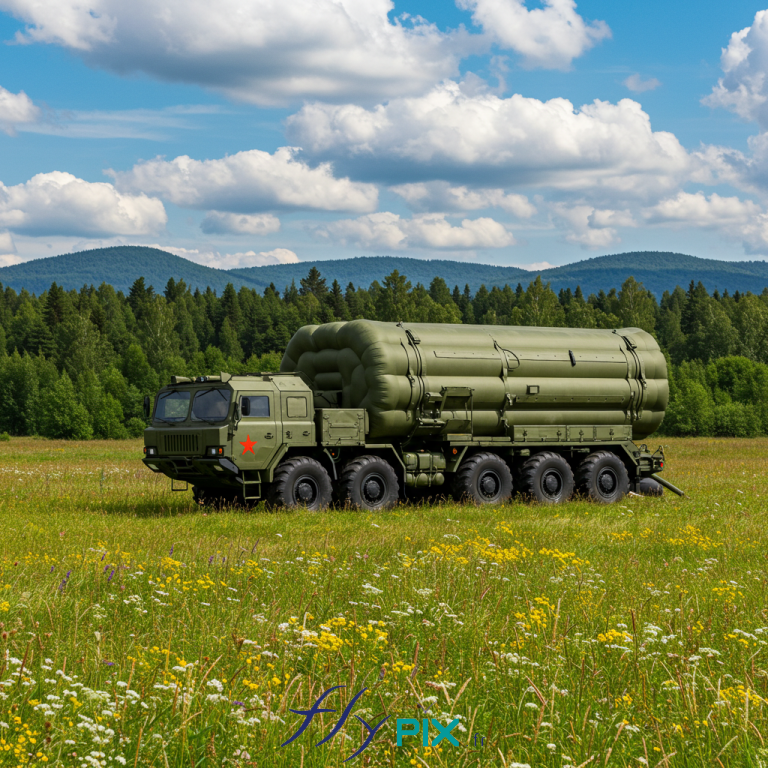
The strategic and tactical advantages of inflatable military decoys
The integration of inflatable decoys into military strategy offers a multitude of advantages, ranging from saving resources to improving troop survival.
It is a versatile tool that can be used defensively, offensively, or as part of deterrence operations.
Economy of means and waste of enemy resources
One of the most obvious advantages is the cost.
An inflatable decoy costs a fraction of the price of a real tank, plane, or missile system.
By deploying dozens of decoys, an army can force the adversary to waste precious and expensive munitions (guided missiles, precision bombs) on worthless targets.
This waste of resources can have a significant impact on the enemy’s ability to conduct long-term operations.
Improved survivability of real equipment
By drawing the enemy’s attention and fire to the decoys, the survival chance of the real military equipment is mechanically increased.
Actual tanks can be concealed or positioned more securely while decoys occupy the visible space.
This is particularly crucial for high-value equipment, such as air defense systems or missile launchers.
Enemy surveillance saturation
In an environment where drones and surveillance satellites are ubiquitous, the ability to saturate the enemy’s observation capabilities is essential.
By deploying a large number of decoys, you force the adversary to devote time and resources to analyzing and verifying each potential target.
This creates confusion and uncertainty, slowing down his decision-making process.
Creating confusion and strategic uncertainty
The widespread use of decoys sows doubt in the minds of the enemy command.
It becomes difficult to distinguish truth from falsehood, which can lead to errors in judgment, untimely troop movements, and a loss of confidence in one’s own intelligence capabilities.
This strategic uncertainty can have a paralyzing effect on the adversary.
Flexibility and speed of deployment
Inflatable lures are lightweight, compact when deflated, and easy to transport.
They can be deployed rapidly in the field in minutes by a small team, without requiring heavy equipment.
This flexibility allows the disappointment to be adapted to the evolving tactical situation.
Deterrence and psychological warfare
The very existence of hyper-realistic decoys has a deterrent effect.
The enemy knows that he cannot trust what he sees, which forces him to be more cautious and to devote more resources to verifying targets.
This can also have a psychological impact on enemy troops, who may feel vulnerable in the face of an invisible and elusive threat.
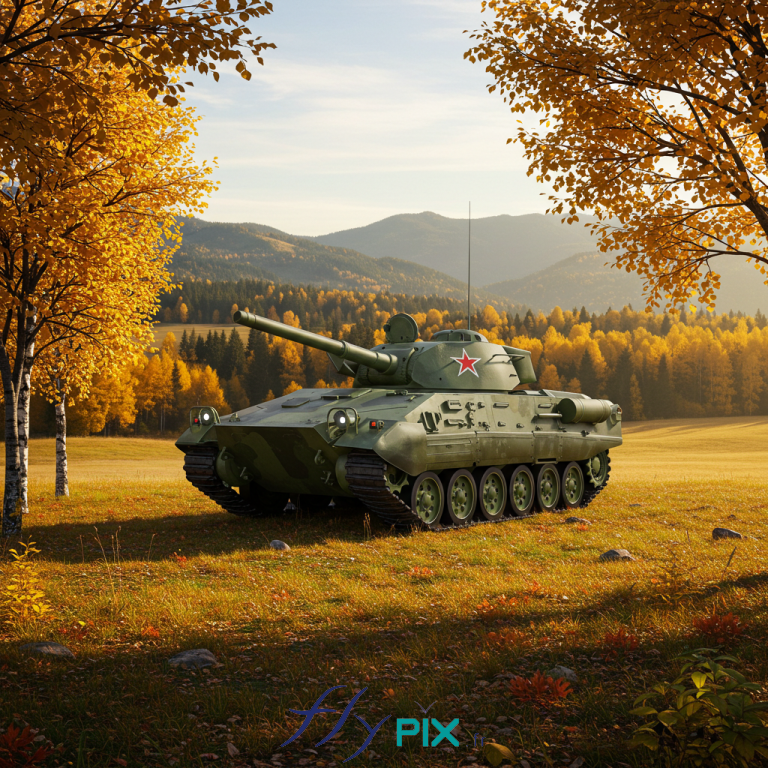
The Strategy of Military Deception in the Modern Era
Military deception is not a mere tactic; it is an integral component of the overall strategy.
It must be carefully planned and executed, in coordination with other military operations.
Inflatable lures are just one tool among many in a range of deception techniques.
Military Disappointment in the Different Phases of the War
- Pre-conflict (Deterrence): The use of decoys can be used to create the illusion of a military power greater than reality, in order to deter a potential aggressor.
- Initial Phase (Surprise): Decoys can be used to mask actual troop movements and create an element of surprise during the initial attack.
- War of Attrition (Economy of Means): During a prolonged war, decoys are essential to waste the enemy’s resources and protect one’s own equipment.
- Post-conflict phase (Stabilization): Decoys can be used to secure areas and deter insurgent movements.
Coordination with other Military Deception techniques
Deception is more effective when combined. Inflatable lures should be used in conjunction with other techniques:
- Camouflage and Concealment: Decoys are more credible when positioned near areas where real equipment might be located, or when partially camouflaged.
- Electronic Warfare (Jamming and Simulation): Jamming enemy communications and simulating false radio signals reinforce the illusion created by decoys.
- Disinformation and Information Warfare: The spread of false information in the media and on social networks can help to shape the perception of the enemy.
- Intelligence Operations: Intelligence about the enemy’s surveillance capabilities allows decoys to be adapted to be as effective as possible.
The role of artificial intelligence and automation
Artificial intelligence (AI) and automation could play an increasing role in military deception.
AI could be used to analyze enemy surveillance data and suggest the best locations to deploy decoys.
Automation could allow for the coordinated deployment and management of decoy swarms.
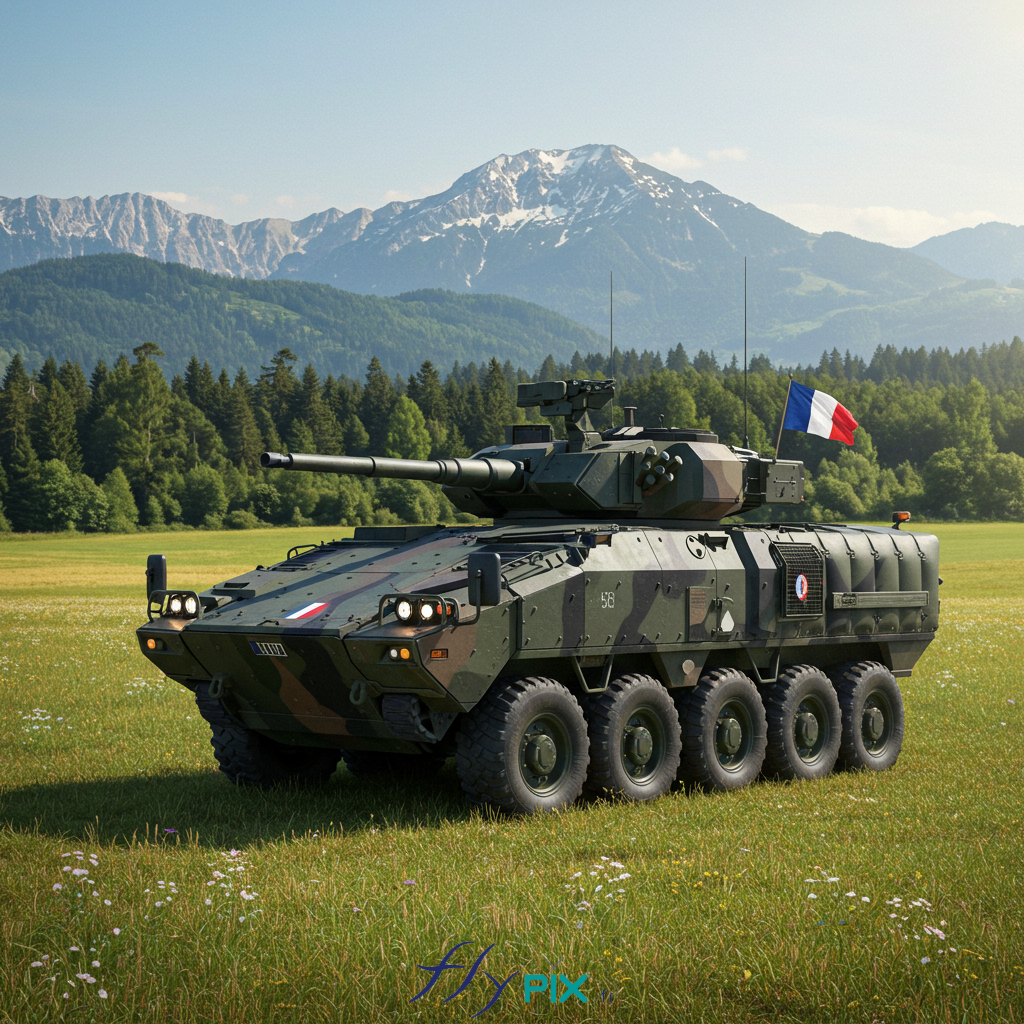
Military inflatable decoys in recent conflicts: case studies
Analysis of recent conflicts provides concrete examples of the use and effectiveness of inflatable decoys.
The Kosovo War (1999)
During the Kosovo War, the Yugoslav army successfully used decoys to deceive NATO bombers.
Wooden and metal replicas of tanks and anti-aircraft defense systems were deployed, forcing NATO to waste ammunition.
However, the effectiveness of inflatable decoys was limited by their thermal and radar realism at the time.
The Iraq War (2003)
The Iraqi army also used decoys to conceal its equipment, but the effectiveness of this technique was limited by the air and technological superiority of the coalition forces.
The War in Ukraine (since 2022)
The conflict in Ukraine offers the most recent and massive example of the use of inflatable decoys.
Both sides deployed hyper-realistic replicas of tanks (M1 Abrams, T-72), air defense systems (S-300, Patriot) and aircraft.
These decoys are designed to fool drones and precision missiles.
Ukrainian companies have specialized in manufacturing these decoys, using lightweight materials and 3D printing techniques.
The use of decoys has been credited with saving a lot of real equipment and forcing the adversary to waste expensive ammunition.
The future of military inflatable decoys and the strategy of deception
The future of military inflatable decoys is promising, with constant technological innovations and increasing integration into military strategy.
Improved realism and simulation of signatures
The decoys will become increasingly realistic, incorporating technologies to perfectly simulate thermal, radar, and electronic signatures. The use of smart materials and advanced simulation elements will make it possible to fool even the most sophisticated sensors.
Integration of AI and automation
AI will play an increasing role in planning and executing deception. Swarms of autonomous decoys could be deployed and managed in a coordinated manner to create a massive and dynamic illusion.
Development of multi-functional lures
The decoys could evolve into multi-functional platforms, incorporating electronic jamming, intelligence gathering or even light defense capabilities.
Expansion into new areas
The use of inflatable lures could extend beyond the terrestrial domain, with the development of lures for the naval and even space domains.
Deception in space and cyberspace
The strategy of deception will increasingly extend into space and cyberspace, with the use of decoys to conceal satellites and critical infrastructure, and to create false information in the digital domain.
Military inflatable decoys and the ethical and legal issues
The use of military decoys raises complex ethical and legal issues.
The risk of confusion for civilians
The deployment of military decoys can create confusion for civilian populations, who may have difficulty distinguishing real equipment from replicas.
This can increase the risk of collateral damage.
Respect for international humanitarian law
The use of decoys must not violate fundamental principles of international humanitarian law, including the principle of distinction between military objectives and civilian objects. Decoys must be deployed in a manner that minimizes risks to civilians.
Information warfare and the truth
The widespread use of decoys and disinformation can contribute to an erosion of trust in information and widespread confusion about the reality of the conflict. This raises questions about truth and accountability in modern warfare.